
Six coaches. One fault. In order.

8 FIXES · 6 INSTRUCTORS · 126 MIN OF VIDEO, DISTILLED

CARD 1 OF 8 · 1 MORE AFTER

TRThe Rick Shiels Golf Show

Find a 15-foot uphill, straight putt and adjust your ball position until it rolls straight.

STARTS AT 6:33 · RR 45
2 MIN CHECK
ONE IDEA · NOT A PLAYLIST
DMDanny Maude

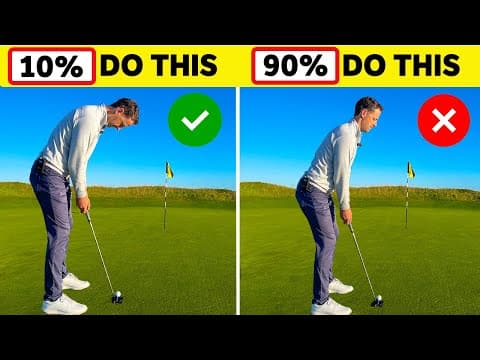
Use a mirror to verify your eye line is directly over the golf ball.

STARTS AT 3:54 · RR 49

2 MIN CHECK
ONE IDEA · NOT A PLAYLIST
SWIPE · TAP TO OPEN
▸ Opens at 3:54 — the part that mattersRR 49
The swing thought

Use a mirror to verify your eye line is directly over the golf ball.

The one idea inside the video — not its title. Swipe for why it works.

Why it works

This video teaches a repeatable putting system focusing on proper setup, eye line, and a consistent pre-shot routine.

What's in the video

TAP ANY MOMENT TO JUMP THE PLAYER

The 2-minute check
  1. Film yourself face-on to check head and spine alignment over the ball.
  2. Ensure your shoulders are level to improve distance control and strike.
  3. Adopt a primary gaze, looking straight down at the golf ball.
  4. Use a mirror to verify your eye line is directly over the golf ball.
  5. Practice the 1-2-3-4 routine: set, look at hole, back to ball, stroke.
SWIPE FOR WHY IT WORKS →
DMDanny Maudedanny-maude · SOURCE OF THIS CARD
The swing thought

Find a 15-foot uphill, straight putt and adjust your ball position until it rolls straight.

The one idea inside the video — not its title. Swipe for why it works.

Why it works

This video teaches how to improve green reading using the "fine straight" drill, optimize putter fit, and develop a fluid, continuous pre-shot routine.

What's in the video

TAP ANY MOMENT TO JUMP THE PLAYER

The 2-minute check
  1. Measure your putter length against your wrist-to-ground distance for proper fit.
  2. Find a 15-foot uphill, straight putt and adjust your ball position until it rolls straight.
  3. Practice looking at the hole during your practice strokes to feel the desired speed.
  4. Develop a continuous motion in your pre-shot routine to avoid overthinking and stagnation.
SWIPE FOR WHY IT WORKS →
TRThe Rick Shiels Golf Showthe-rick-shiels-golf-show · SOURCE OF THIS CARD
The swing thought

Look behind the hole to see how the ball breaks as it loses speed in its final few feet.

The one idea inside the video — not its title. Swipe for why it works.

Why it works

This video teaches a systematic process for reading greens, assessing high/low points, and identifying break on bent grass.

What's in the video

TAP ANY MOMENT TO JUMP THE PLAYER

The 2-minute check
  1. As you walk up to the green, assess the broad horizon to find the high and low points.
  2. Perform a 360-degree tour of the putt, walking on the low side and feeling the slope with your feet.
  3. Look behind the hole to see how the ball breaks as it loses speed in its final few feet.
  4. Commit to your read and hit the putt with confidence, even if it feels like a big break.
  5. For short putts on fast greens, hit it firm, favoring the side of the hole where it might break.
SWIPE FOR WHY IT WORKS →
GSGolf Sidekickgolf-sidekick · SOURCE OF THIS CARD
The swing thought

Double the distance of the ball's trajectory from the baseline at the two-thirds point to determine your aim line.

The one idea inside the video — not its title. Swipe for why it works.

Why it works

This video teaches how to accurately read breaking putts by using the "two-thirds reference" point instead of the apex.

What's in the video

TAP ANY MOMENT TO JUMP THE PLAYER

The 2-minute check
  1. Double the distance of the ball's trajectory from the baseline at the two-thirds point to determine your aim line.
SWIPE FOR WHY IT WORKS →
PKPhil Kenyon Puttingphil-kenyon-putting · SOURCE OF THIS CARD
The swing thought

Use fingers to establish aim point

Feels like: “Fingers show the true break”

The one idea inside the video — not its title. Swipe for why it works.

Why it works

This video teaches the controversial Aimpoint green-reading system, focusing on feeling slopes and using fingers to accurately determine break.

What's in the video

TAP ANY MOMENT TO JUMP THE PLAYER

The 2-minute check
  1. Rehearse a 10-foot putt swing length and tempo.
  2. Rehearse a 20-foot putt swing length and tempo.
  3. Rehearse a 30-foot putt swing length and tempo.
  4. Repeat these rehearsals with actual putts.
SWIPE FOR WHY IT WORKS →
PFPeter Finch Golfpeter-finch-golf · SOURCE OF THIS CARD
The swing thought

Walk a half-moon around the hole

Feels like: “Sense the slope through your feet”

The one idea inside the video — not its title. Swipe for why it works.

Why it works

Teaches green reading by using visual cues and foot feel, and distance control by varying backswing length with constant acceleration.

What's in the video

TAP ANY MOMENT TO JUMP THE PLAYER

The 2-minute check
  1. Get low to the ground to visually read the green's contours.
  2. Walk in a half-moon shape around the hole to feel the slope with your feet.
  3. Maintain constant putter acceleration through impact, varying only backswing length.
  4. Stride out 15, 30, and 45-foot distances on the practice green.
  5. Practice putts at these set distances until you develop a consistent feel.
SWIPE FOR WHY IT WORKS →
DMDanny Maudedanny-maude · SOURCE OF THIS CARD
The swing thought

Adjust stroke length for pace

Feels like: “Get the feel of the greens”

The one idea inside the video — not its title. Swipe for why it works.

Why it works

Teaches Masters winner Fred Couples' feel-based putting warm-up routine, emphasizing pace control on unfamiliar greens.

What's in the video

TAP ANY MOMENT TO JUMP THE PLAYER

The 2-minute check
  1. Start your putting warm-up with 40-50 foot putts to get the feel of the greens.
  2. After 10 minutes of long putts, transition to practicing shorter putts.
  3. Place two tees to define your backswing and follow-through for consistent 10-12 foot putts.
  4. Practice distance control by hitting three balls, each progressively a few feet further.
  5. Before leaving the green, hit three putts as close as possible to the fringe.
SWIPE FOR WHY IT WORKS →
PTPGA TOUR Superstore pga-tour-superstore · SOURCE OF THIS CARD
The swing thought

Place an obstruction to force taking more break on practice putts.

The one idea inside the video — not its title. Swipe for why it works.

Why it works

This video teaches fundamental putting setup, the interdependent relationship between line and speed, and mental strategies for confidence and reading break.

What's in the video

TAP ANY MOMENT TO JUMP THE PLAYER

The 2-minute check
  1. Practice aligning your ball using a stencil on the practice green.
  2. Practice hundreds of one-foot putts to build confidence and alignment.
  3. For putts outside 10 feet, putt to a tee, stopping the ball close.
  4. For short putts, widen your stance and move the ball to the center.
  5. Place an obstruction to force taking more break on practice putts.
SWIPE FOR WHY IT WORKS →
GSGolf Sidekickgolf-sidekick · SOURCE OF THIS CARD
The swing thought

Focus only on putting pace

Feels like: “Free your brain for speed”

The one idea inside the video — not its title. Swipe for why it works.

Why it works

This video teaches strategic course management to simplify short game shots and specific chipping techniques like toe-down chipping.

What's in the video

TAP ANY MOMENT TO JUMP THE PLAYER

The 2-minute check
  1. Practice toe-down chipping by picking up the club handle and gripping it like a putt.
  2. Chip the ball off the toe of the club for consistent flight and roll out.
  3. Take the same half swing with sand, gap, and pitching wedges for distance control.
SWIPE FOR WHY IT WORKS →
GSGolf Sidekickgolf-sidekick · SOURCE OF THIS CARD

Nothing here yet.

Open a card and tap Save. What lands here is what you take to the range.

8 OF 8 · STACK COMPLETE

That's the Whole Stack.

Most golfers would watch three more videos right now. Don't. Take what you're working on to the range and give it two weeks.

8
CARDS
0
SAVED
6
COACHES

COME BACK AFTER YOUR NEXT RANGE SESSION

Going deeper

1 more video on this fault.

You've done the work. This is the rest of what we've curated on this fault — browse it if you want, but the range is where the change happens.

Read the full breakdown on Reading Greens

Read the full breakdown on Speed Control